Its time we start telling our own stories; marginalized people can speak for themselves. No longer will we allow the media and those in power to distort our truths. We must re-write the history books and make all facts plain. Tell and write your own stories; share them with the world.
This year I attended the Women's Conference in Long Beach, CA. I won two VIP tickets as a Great Giveaway Winner. This was my second time at the conference; back in 2008 I earned a seat as an Inductee into the Minerva Leadership Organization. It was a great experience, The day was hell-a-chaotic and long but all in all, a great experience. Sad part is, with Maria Shriver no longer our First Lady, the conference will NEVER be as cool or star studded.
My winning statement:
As a woman, what personal freedom do you value most?
Estella Owoimaha, 20s:
I value my freedom to defy gravity and create change. I can do so because great women have set great examples. I can be black, female, mother, lesbian, warrior and poet if I wanted to because Audre Lorde has set such a great example. I can hold a public office and run for president because Hillary Clinton has. I can own a television network and build an entire school if I wanted to because Oprah Winfrey already has. Though they have set the bar pretty high, I can surpass Lorde, Clinton and Winfrey. They are just three of the many women that serve as inspiration, guidance and standards for success. However, even if there weren't great female examples to follow, I value my freedom to be the "first" at accomplishing some task.
My name is Estella Owoimaha. I am a Minerva Leader of 2009 and for the rest of my life. I am an African American woman. I’m a lot of things. Most importantly, I am capable; capable of greatness. When I became a Minerva Leader, I also accepted the responsibility of “architect of change”. I know limits are all mental. I have the ability to defy gravity, as so eloquently stated by the Elphaba of Wicked. As an African American woman, seems like most of my accomplishments defy the laws of gravity. I am okay with that because I embrace challenge with the intent of success and triumph.
I saw For Colored Girls last night with my husband (well, he will be in 5 weeks). He was opposed to going but I nagged him enough to make him change his mind. Let me begin by saying, I am so pleasantly surprised. I went in to the film skeptical and fearful Perry might destroy such a beautiful and powerful piece of literature. (I am also not a fan of Tyler Perry's work and Ntozake Shange is one of my all time favs.)
Every phrase and every beat in the chore-poem has great depth and meaning. It is something that could have been easily lost in translation. I wan to commend Tyler Perry for doing Shange justice and translating this book well to film. Literature and film are two totally different mediums so I understand that he might have had to make some hard artistic choices to maintain integrity.
After watching the film I went home and re-read the book to make a fully informed critique of the film. I decided, for what it was, I was happy and would recommend this film to everyone - especially men.
For starters, Perry could not have assembled a better cast of women. Every performance was amazing. I have always loved Lorreta Devine and Thandie Newton and Madame Rashad. Kimberly Elise is always so moving and she definitely was in this film. I have read the book so many times and every time I notice something new. With these women and their performances I got the same feeling; there was a new emotion and interpretation with their delivery, as if I had read it all over again with fresh eyes. One example, "Somebody almost walked off wit all of my stuff...", delivered by Devine, just became so much clearer for me. Sure, I was able to comprehend the words when I read them but when she spoke them, I felt those words.
There were some great moments in the film. One was the Opera scene...no spoilers so I'll let you see it and decided for yourself on that one.
One of my favorite parts of the book is the Toussant L'Ouveture poem which was shortened dramatically for the sake of moving the film along. I understand, but its my favorite part of the book and I would have liked to hear it through. Perry of course could not remain 100% true to the book but fans of the book beware he did make a few changes.
One change that I appreciated was the "my world is now six blocks" speech delivered by Macy Gray. In reading the poem, I always imagined an older woman or a middle age woman moving about her day full of errands in Harlem. Perry's interpretation of a very much jaded woman whose given up for the most part was a different look at the character I had never seen before.
IF you have seen the 80's PBS version of the film, featuring Shange herself, you may prefer this Perry's version, much like I do. That's not to say I don't love the original, but Perry's version makes for a much better film. I also believe that Perry's version will be able to reach those women moving to the ends of their rainbows; those women who may not find the book easily accessible.
Those of you out there who might be skeptical like I was, I say give it a shot. For those of you who are Perry/Madea fans, this may not be the film for you.
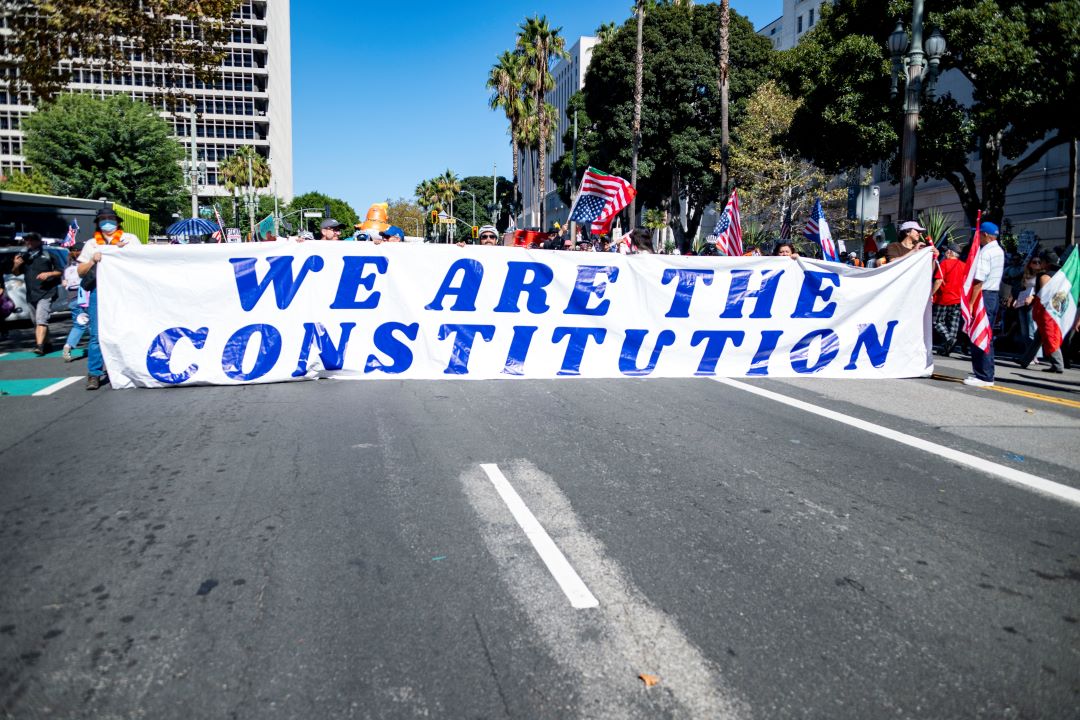
On March 22, 2010, approximately 15,000 college students from across the state marched to the Capitol Building and held a rally on its lawn. The march began at Raley Field, in Sacramento, California, and ended on the steps of the Capitol. Bodies covered the entire lawn of the Capitol building, flooding over into the sidewalks and streets. Students marched with signs that read, “Give Me Back My Classes!”, “Educate, Don’t Terminate”, and “No More Budget Cuts!” In complete harmony, 15,000 students chanted: “They say cut back, we say fight back”, “Students united, we’ll never be united”, “STUDENT POWER!”
From 1968-1969, mass, successful student movements have taken place from Berlin to Canada, all over the U.S., Poland, France and Brazil. In solidarity with past student movements, a new student movement has taken root in California and this Nation. Students of California will be written into the pages of history, next to student leaders of the past, for their tremendous feats of activism that has taken place this month.
It is fitting that California State University, Northridge (CSUN), has taken a primary role in this statewide movement just months after their 40th anniversary of the 1969 student rebellion that established the Pan African Studies Department, the Chicano/a Studies Department, and the Educational Opportunity Program.
Fun fact: since 1987, fees for the California State University system have risen by 650%. At CSUN, and similarly on other CSU campuses, full-time faculty are subject to eighteen furlough days during the academic year, no more than nine furlough days each semester. Some Full-time faculty members, including Department Chairs, are subject to twenty-four furlough days between July 1, 2009 and June 30, 2010. Tacked onto to the furloughs is a 10% pay cut for all faculty members. Sadly, furloughs and pay cuts are just a fourth of the picture.
In addition to the affects on faculty and staff, students, by far, have been left to cope and piece back together their shattered education. California college students have suffered through cuts in classes, tuition and fee hikes, loss of financial aid, cuts to programs and services on campus, as well as, the loss of some great professors. Students will continue to suffer and these attacks on the higher education will continue unless something is done to stop them.
The shocking and shameful budget cuts on education have galvanized students everywhere into action. The worst of the education cuts have taken place in California. This state is suffering from its worst financial crises in decades. Officially, the state is broke. Unfortunately, California legislature has seen fit to destroy the public education system in an attempt to salvage what’s left of the world’s 8th largest economy.
Most of what has taken place at CSUN begun in March 4, 2010 with the statewide “Day of Action” protest. Across California Higher Education institutions, students partook in a walk out followed by a march around their respective campuses. Most were peaceful with minor incident, but for Northridge, a “Day of Action” ended in police occupation, six arrest and brutal injury. In the latter hours of March 4th, a few hundred students took to the streets and sat in the intersection of Prairie and Reseda, a few blocks away from the campus and approximately one block away from the permitted protest area. In response to the students’ actions, hundreds of law enforcement officers were brought in to diffuse the situation. Ironically, police officers only heightened the situation.
Students’ intentions were to peacefully protest around the surrounding community, chanting, with picket signs. When the city saw fit to call in at least 150 officers, for about the same amount of students, tensions continued to rise as opposed to dissipate with the tiring legs of CSUN students. Students remained strong, diligent and united. They peacefully stood together, with locked arms, in protest of state budget cuts to education. Chanting “Peaceful Protest!” students refused to be intimidated by police in full riot gear. Consequently, 5 students and one professor were arrested.
In the arrest of 74 year old Dr. Karren Baird-Olsen of the American Indian Studies Department, police officers broke her arm, threw her to the ground, trampled her with the bottom of their black boots and forced her to wait for over two hours for an ambulance. With her heart condition, this was undoubtedly a traumatizing ordeal. Dr. Baird-Olsen, still in recovery, stands in solidarity with the students who were arrested. Also arrested were Jonnae Thompson, Justin Marks, Anthony Garcia, Jose Gomez, and Angel Rodriguez. These five students and professor are now being referred to as the CSUN 6. When asked to comment on this, Dr. Baird-Olsen replied, “The Peaceful CSUN 6.” She went on to say how proud she is of the students and how amazingly honored she is to be involved. Unfortunately, CSUN’s president, Joelene Koester hastily made statements against these students without full perspective on what took place March 4th. She referred to the peaceful protesters as “unruly”.
Dr. Anthony Ratcliff, professor of the Pan African Studies Department, had this to say, “…it is imperative that we stand in support with those students and professors who the police assaulted and arrested for fighting the deterioration of our education system through civil disobedience.”
On the eve of March in March, CSUN students put on “March in March Eve” to help prepare the student body for the events to follow in Sacramento. The night was filled with teach-ins, workshops, poster making, food and music. Workshops covered “Effective Student Lobbying”, Civil Rights” and the “Budget”. Nana Gyamfi, attorney of the Human Right Advocacy, spoke on effective lobbying and civil rights. Also on the panel of speakers were San Francisco 8 members, formerly of the Black Panther Party, and currently members of Committee for the Defense of Human Rights (CDHR), Hank Jones and Ray Boudreaux.
Hank Jones and Ray Boudreaux spoke of their past experiences in the Civil Rights and Black Power Movements. They spoke to help instill some inspiration and affirm to all the students they are in fact doing the right thing. Hank told the crowd, “Don’t be shamed. Be Proud. What you’re fighting for [education] is a human right. What we fought for were human rights. This is just a continuation of that movement.” The theme of Nana’s civil rights workshop was “fearless discipline” – not to be confused with recklessness. She spoke of how, as student activists, we needed to be clear of our goals, tactics, and our limits. If these clear objectives were clear, the fearless discipline would follow and guide our efforts of fighting state budget cuts. Nana’s advice did not fall upon deaf ears.
California State University, Northridge and Associated Students were able to fill three busses and attend the march in Sacramento. CSUN students were at the march in numbers, approximately 150, including many student organizations; Black Student Union, MeCha, Central American United Student Association, Hip Hop Think Tank and others.
Assembly member Warren Furutani was among the agenda of 30 speakers at the March. He reminded the crowd that 50 years ago the California Master Plan for Higher Education was passed and one of the promises it established for the California education system was free education. “Brothers and sisters, the answer is not in this building,” Furutani said. “The answer is in your activism.”
One proposed solution to the current attack on education is California Assembly Bill 656. Presented by California State Assembly Majority Leader, Alberto Torrico, Assembly Bill 656 would create the California Higher Education Fund (CHEF) to be funded by a new 9.9% oil severance tax. Alberto Torrico was also one of the 30 guest speakers at March in March. In his speech, Torrico mentioned how California remains the only oil producing state that does not have a severance tax. The CHEF would annually allocate revenue institutions based on the following formula: 60% to CSU, 30% to UC, and 10% to Community Colleges. This bill is supported by California Faculty Association, California Federation of Teachers, CA State Student Association, California Teachers Association, Faculty Association of California Community Colleges, SEIU and UC Student Association. There is an online petition in support of this bill open to the public.
After the police occupation of CSUN on March 4th, it is worthy to note the absence of violence or incident at the March on Sacramento. It was indeed an honor to be at such a massive, peaceful protest. It is an even greater honor to be a pat of a worthy movement. What’s next for this student movement? April 21, 2010 there will be another march in Sacramento, to converge on the Capitol Building, led by United Teachers Los Angeles (UTLA) whose primary message is “Fight for California’s Future”. For more information on this march, see www.utla.net/march52010.
A march will not be enough to remedy this ill; a march is merely one tactic. The movement must continue. The state of California must be held accountable; the United States of America must be held accountable. Education is a human right; an inalienable right.
For continued updates, student demands, video and photos, visit: www.inarratefrommargins.blogspot.com
March 5 - April 21, 2010: March for California's Future
"There’s something about a march that is very powerful. It’s a powerful weapon, a powerful organizing tool, and it has a powerful influence on those who participate."
-César Chávez
On March 5, the California Federation of Teachers (CFT) and a diverse coalition of labor, business, education, and faith groups embarked on a 48-day “March for California’s Future.”
On April 21, thousands will join the marchers in Sacramento for a major rally with one key message: Fight for California's Future!
UTLA is inviting all available UTLA members and their families to take part in special one-day journey on Wednesday, March 31st to be part of this historic march. If interested, see details. The deadline to sign-up is 5:00 pm, March 29th.
Thousands of students walk across the Tower Bridge, making their way to the state Capitol in Sacramento in protest of budget cuts Monday. Photo Credit: Hannah Pedraza / Photo Editor
SACRAMENTO, Calif. – CSUN students along with other students and faculty from across the Golden State who rallied on the steps of the Capitol against budget cuts were encouraged by speakers to continue their activism even after the March in March event was over.
The event’s master of ceremonies Reid Milburn, student senate for California community colleges president, said change depended on the more than 15,000 students including CSUN students that marched to the Capitol on March 22.
“It doesn’t end here,” Milburn said. “It’s up to each one of you to go back and talk to legislatures. It’s up to us to rescue education.”
The trip to Sacramento was a follow up to the Associated Student’s postcard initiative held last semester, said Neil Sanchez, A.S. attorney general. Students from CSUN’s Movimiento Estudiantil Chicano de Aztlan (MEChA), Central American Student Association (CAUSA), the Black Student Union (BSU) and Students for a Better Education (SQE) were among some of the participants.
Sanchez said that after the March 4 walk outs, A.S. became aware that students wanted to become more involved in events like the rally. Sanchez added that the trip to Sacramento had been planned in conjunction with the California State Student Association (CSSA) and an invitation was extended to students willing to participate.
One of the students participating was senior Danny Santana, a member of MEChA and Students for a Quality Education (SQE), who said he was participating to send a message to the governor and the chancellor about the negative effect the budget cuts are having on education.
“There’s an energetic sense of unity (at the rally),” Santana, 20, said. “We are all in this together. The CSU, the UC and the CCs.”
CSUN grad student Dom Lupisan, said he attended the rally in support of education because he wants to go in to teaching and the effects will continue to affect him even after he graduates.
Lupisan, 27, said he thought the rally was more effective than the March 4 protest as students were taught through workshops how to effectively lobby.
“We have an understanding of why we are here and we are all on the same page and know this is a prolonged battle,” Lupisan said.
Senior Justin Marks, 22, one of the workshop coordinators, said the workshops held before students’ departure from campus where to inform students on how the budget crisis is affecting education.
“The workshops were to educate, to create comradity and create synergy within our own campus,” Marks said.
CSUN students arrived in three buses to Sacramento on March 22 to join others at the Raley Field where a crowd gathered in anticipation of the one mile walk to the Capitol.
Students from the three tiers of California universities began to march holding signs and banners around 10 a.m. chanting “hey, hey hoho budget cuts have got to go.”
Once on the Capitol steps a mix of speakers addressed the roaring crowed.
Assemblymember Warren Furutani, who reminded the crowd that 50 years ago the California Master Plan for Higher Education was passed and one of the promises it established for the California education system was a free education, said the rally was going to be good but the fight wasn’t over.
“Brothers and sisters, the answer is not in this building,” Furutani said. “The answer is in your activism.”
Marks said he agreed with the overall message at the rally on continuing the efforts to make change and to continue with the movement.
“One of the things we will do is increase the contact with our representatives,” Marks said. “This is a movement and it is not just about March 4 or March 22.”
Sanchez, 22, said the fight for education would continue at CSUN and student involvement was crucial but to get students to participate a “grassroots effort” would have to take place.
“It’s easy to talk about it but to get them to come out, it’s all about interaction,” Sanchez said. “There’s really no successful formula.”
Thousands of college students and faculty rallied Monday in Sacramento in support of higher education, another in a series of recent actions throughout the state designed to highlight the effects of budget cuts.
The demonstration was organized by the Student Senate for California Community Colleges and drew about 5,000 participants who marched from a ballpark in West Sacramento to the north steps of the state Capitol to protest fee increases, canceled classes and employee layoffs at community colleges, California State University and the University of California.
Several legislators spoke to the crowd, as did community college Chancellor Jack Scott, who thanked the students for making their voices heard and encouraged them to continue lobbying the Legislature and governor to support education funding.
The state’s 112 community colleges — which make up the largest system of higher education in the nation — sustained about $520 million in budget cuts in 2009-10. Student speakers shared personal stories about the effect of budget cuts and vowed to continue putting pressure on lawmakers.
“The message was to invest in education; students will pull California out of this recession,” said Reid Milburn, a history major at Sacramento City College and president of the student senate group. “But our second message is that with almost 3.5 million students in all three segments of higher education, it’s up to us to continue to advocate for education and not just come up here for one day, for one big march.”
Earlier this month, students and faculty at more than 100 campuses in California and across the nation held mostly peaceful protests opposing education cuts.
In a statement after Monday’s rally, California Secretary of Education Bonnie Reiss said:
“At a time of difficult budget cuts, the governor’s budget proposal prioritizes education and protects higher education from further cuts and fee increases. We must do everything possible to ensure that every student wishing to pursue higher education has the access and the resources necessary to earn a degree and build a brighter future. I urge the Legislature to listen to these students and adopt a budget that shares the governor’s commitment to fully fund education in the state.”
-- Carla Rivera
They converged on Sacramento on Monday from community colleges across California.
Among them were Iraq war veterans, people with disabilities, ex-prostitutes, students who are the first in their family to attend college and thousands more who believe their future depends on a public education system that is crumbling beneath them for lack of funding.
"We fought for our country, but when we get back here, we have to continue fighting," said Jordan Towers, 26, one of at least 26,000 returning veterans who are depending on California's two-year colleges to retrain them for the workforce.
A Marine veteran and student at City College of San Francisco, Towers feels the impact of deep budget cuts personally. Reduced staffing at the college means it takes months for GI benefits to reach him - so long that he had to sell his television set and computer keyboard last semester to pay his rent.
Courses, counseling, library hours, book assistance, summer school - all have been cut at community colleges statewide.
"Veterans have done all that's been asked of them, and now they're suffering as schools across California face cuts," Towers said.
Civil but pointed
On Monday morning, he joined a vast crowd at Raley Field in West Sacramento as they marched a couple miles past a gauntlet of mounted police to the Capitol. Carrying signs and banners, the protesters chanted, "No cuts! No fees! Education should be free!"
It's a familiar refrain. Students from public colleges and universities have been protesting since last fall, when courses were cut way back even as fees soared by 32 percent in response to the state's latest budget deficit, now at $20 billion.
To bridge that deficit, lawmakers will spend the next several months debating what state programs to cut and whether education will again be among them.
Seeking practical solutions
Unlike previous protests, which were organized largely by University of California students and often resulted in arrests for civil disobedience, Monday's rally on the Capitol steps was noisy but civil, the effort of generally older community college students standing side by side with administrators and lawmakers.
They emphasized practical solutions to the education funding dilemma: bypassing the gridlocked Legislature to place a measure on the statewide ballot for higher education funding; supporting Assembly Bill 656, an oil tax that would send proceeds to public colleges and universities; getting signatures for a ballot initiative to reduce to a simple majority the votes needed for the state to pass a budget or raise taxes.
Most of all, the students vowed, they would use their numbers to vote out politicians who fail to support their cause.
"This year at the ballot box, we are going to hit them hard, and hit them fast," said Jesse Cheng, an incoming student representative to UC's Board of Regents. "In November, like they made us pay, we will make them pay."
The crowd roared.
Not enough classes
Jack Scott, chancellor of the 3 million-student community college system, said that some 200,000 students will be unable to enroll next year because there aren't enough classes for them.
"The state doesn't give us enough money," said Scott. "We're not going to go away silently."
After the rally, some students coursed through the halls of the Legislature to tell their stories to any lawmaker who would listen.
Six yellow-shirted classmates from Mount San Antonio College in Walnut (Los Angeles County) knocked on the door of their assemblyman, Charles Calderon, D-Whittier (Los Angeles County).
He wasn't there, but the students told his aide, Vanessa Lugo, that without college, recovered addicts, prostitutes and hustlers would still be on the street.
That described some of them, they acknowledged.
"I know what it feels like to hustle on the street," said student Evelyn Vargas, tears welling in her eyes. "It's only because someone at school said I could do it that I'm succeeding."
Lugo nodded and promised to inform Calderon about the tutoring, book scholarships and low-income student grants at their school.
All had been cut.
Chanting "No more cuts!" and "Education should be free!" Solano Community College student Tara Norman joined a large crowd of college and university students Monday for a boisterous rally and protest in Sacramento against more cuts to higher education. More than 1,000 college students from across California converged on the Capitol to decry slashed budgets and rising fees at public universities and community colleges.
"I was excited to see so many people were there caring about higher education and we were all there for the same cause," Norman said.
The March on March for Higher Education included students walking from Raley Field in West Sacramento to the North Steps of the Capitol to demand more funding for public education.
Lasting several hours, it was the third such major protest this month.
Nearly 25 Solano College students took part, some carrying a large banner, and signs with such slogans as "Don't Kill My Education" and "No More Cuts. I Need My Education."
Nearly 30 students from Napa Valley College also participated, including Alex Shantz, who is worried about higher tuition and other fees.
"It was empowering to a lot of people," Shantz said. "People were demanding and were fired up. They are angry because the economy is bad and they are cutting so much for education."
Another student, Amoriah Hartley, 31, a sociology student at Foothill College in Los Altos Hills, said she was worried her campus would stop providing
Advertisement
free tutoring and writing assistance to students because of budget cuts.Hartley, who hopes to transfer to a four-year university and become a social worker, urged Gov. Arnold Schwarzenegger and the Legislature to consider raising taxes to protect education funding.
Cuts in state funding have led to class cutbacks, staff layoffs and sharp fee hikes at the 10-campus University of California, the 23-campus California State University system and 110 community colleges.
California Community Colleges Chancellor Jack Scott spoke, drawing attention to the $520 million in cuts the community college system sustained this year.
Scott said he hoped the strong showing would persuade state lawmakers to protect funding for two-year colleges that have seen funding cut by 8 percent this academic year despite record demand for classes.
"I hope legislators will understand how deep students care about their education," Scott told The Associated Press. "By denying students their education, we're going to hurt our state economically."
California Secretary of Education Bonnie Reiss issued a statement following the rally, urging state lawmakers to ensure higher education does not withstand further cuts.
"We must do everything possible to ensure that every student wishing to pursue higher education has the access and the resources necessary to earn a degree and build a brighter future," Reiss said.
Amoriah Hartley, 31, a sociology student at Foothill College in Los Altos Hills, said she was worried her campus would stop providing free tutoring and writing assistance to students because of budget cuts.
Hartley urged Gov. Arnold Schwarzenegger and the Legislature to consider raising taxes to protect education funding.
"If we are all a bunch of tightwads, we're not going to get anywhere as a country," she said.
My objective seemed simple enough: enroll in a California State University and earn a Master's degree. But what should have been a straightforward quest has instead been fraught with frustration and anxiety.
A complex online application process failed to disclose, up front, what documentation I would need in order to complete the form. I had to advance through multiple screens abruptly demanding information. If I left an answer blank or my answer made no sense, I was subjected to screen after screen of do-overs, highlighted in glaring red.
In the end, my effort was pointless because the cost of tuition is so far out of reach ... only, somehow, the Web site failed to make this clear until after I'd submitted a nonrefundable application fee.
Due to a limited amount of state support and a large number of students, the program that I wished to apply to was not admitting students into its state-supported program for fall 2010. Instead, the only option available is a so-called "special session," which is not supported financially by the state of California. The fees are "highly competitive" (I prefer the term "draconian") at $474 per unit.
So, for now, I've decided to give my business to a community college. It charges $26 per unit and I can take online courses in my field of study.
Maybe it won't be as prestigious as a master's degree but I believe these community college courses will be of benefit for the information that they provide me.
I think it bodes ill, however, for the state of California if it prices higher education so far out of reach. Some jobs require the completion of a master's degree: a librarian, for example. Will California have to do without librarians when those in the work force retire?
California must invest in higher education that is accessible to all, or else must suffer the consequence of failing to prepare its citizens to serve in positions that it needs. But instead, current events demonstrate a different trend.
The legislative analyst's office for the state of California states that Governor's Schwarzenegger's proposed investment of $11.5 billion in general fund support assumes that UC and CSU systems will enact fee increases and that access to financial aid will be reduced and restricted (http://www.lao.ca.gov/analysis_2009/highered/highered_anl09003002.aspx).
Discussing my problem with a professional in my field of study, she told me she had earned her master's degree in another state. The question then occurred to me: if people have to leave the state in order to attend colleges, what will entice them back to California to benefit our society?
Consider that during the course of study, these students may put down roots. You cannot assume that they will invariably live singly, unattached, in dorms. They may be in partnered relationships and raising families of their own.
How much easier and more convenient for themselves and for their families to seek employment close to the area that they have come to view as home: where their partner or spouse may go to work and their children may attend school.
Of course, for those blessed few who come from wealthy families, cost will not be an issue. They can go full-time to school in California or anywhere else.
But the rest of us will have to ask ourselves how our college education will be paid for. We'll have to jockey for available scholarships or take out exorbitant loans that leave us in debt for years after we've completed our course of study.
We may have to leave California and hope that other states place a wiser priority upon funding higher education.
Or we may take community college courses and hope that on-the-job experience helps offset the lack of a degree or hope that circumstances permit us to pursue a degree later on in life.
In any case, California will reap the consequences of the priority it fails to place on making higher education affordable. It will only serve us right.
The effects of fewer college graduates on California's economy will be far reaching and disastrous. For the past two decades, California's economy has increasingly changed from a "manufacturing economy" to a "service economy." The result has been a steady decrease in unskilled-labor jobs in exchange for an increase in the professional and skilled-job markets.This year, the California State University (CSU) was forced to cut 40,000 student spots of its normal starting freshman class. This means that, in about four years, there will be half as many professionals introduced into the job market by the CSU as are normally graduated and the same for each year thereafter.
Vis-à-vis, there will larger numbers of unskilled workers in California and fewer jobs for them.
Legislative perception is that higher education is an expense; but the CSU has proved, over and over, that for every dollar invested, the state receives a return of $4.41 -- that's a return-on-investment of more than 85 percent in four years! Cuts to higher education are cuts to one of the state's leading profit centers.
Peter J. Hayes
CFA Chapter President California Maritime Academy
Associate Professor Marine Transportation
Vallejo
Published: Tuesday, Mar. 23, 2010 - 12:00 am | Page 3A
Last Modified: Tuesday, Mar. 23, 2010 - 9:31 am
Thousands of public college students gathered at the Capitol on Monday to protest cutbacks in state aid to colleges and rising collegiate fees.
They joined an expanding club of those with stakes in the deficit-ridden state budget who dislike what's happening – furloughed state workers, home health care providers and recipients, doctors who serve the poor, teachers, even farmers whose open space subsidies have been eliminated.
Each stakeholder group makes its case with as much drama as it can muster, often with stories of horrendous effects, real or apocryphal. Surely, each argues, money can be found to avoid draconian cutbacks in its particular program. Surely something else – fill in the blank – is less important to the welfare of the state.
The simple fact, however, is that their demands, including those already in law, add up to tens of billions of dollars more than the state's recession-battered revenue system can muster, even with the temporary tax increases enacted a year ago.
The gap is likely to widen unless there is some very explosive recovery from the worst recession since the Great Depression. And chances of that happening are nil, even the most optimistic economists concede. It would take a decade of record-high economic growth to wipe out job losses from this recession.
More tax increases are politically impossible, as even the Legislature's pro-tax Democratic leaders acknowledge. Their most optimistic scenario is for revenues to pick up a little bit and for the federal government, whose budget deficits are proportionately bigger than California's, to give us a few extra billion dollars.
Even were the Democrats' rosy scenario to become reality, California would still be left with at least a $10 billion deficit, which would still require more of the cuts that the college students and other protesters abhor.
The larger public, meanwhile, just wants Gov. Arnold Schwarzenegger and the Legislature to get on with it.
A new Field Poll says that the economy and the budget crisis are the two most important issues to voters in this election year – and there's almost nothing that the state can do about the economy, at least in the short run.
There are, in brief, no pain-free fixes to this crisis, one born of irresponsible fiscal decisionmaking earlier in the decade and compounded by the recession.
The short-term gimmicks that the governor and lawmakers have employed merely avoid the day of fiscal reckoning – and make it worse.
The crisis will continue for years and may even get worse as the temporary taxes expire, as shortfalls in public employee pensions and retiree health care bite, and as the new federal health insurance program kicks in, pressuring the state to pick up the tab for many low-income residents.
The aggrieved can protest all they want, but they cannot change that reality.
Published: Tuesday, Mar. 23, 2010 - 12:00 am | Page 4A
Last Modified: Tuesday, Mar. 23, 2010 - 9:31 am
Demonstrations for increased education funding continued Monday as roughly 5,000 students and employees from community colleges and California State University descended on the state Capitol for a noisy but peaceful rally.
They came from around California, wearing shirts representing their campuses: Humboldt, Northridge, Fresno, West Los Angeles,San Jose,San Francisco. And they said cuts to education in recent years are hurting their odds for the future. Lee Cha, 23, a student in Sacramento State's teaching credential program, said he's been hit two ways by cuts to education funding. It's become harder to get classes he needs to complete his university studies, while the demand for new teachers in K-12 school districts has fallen.
"I'm studying to be a teacher, and it's really looking tougher for me to get a job," Cha said. Monday's demonstration was the latest in a string of protests that began in early March with students up and down the state speaking out against rising fees and reduced courses at California's colleges and universities.
Community college Chancellor Jack Scott said the state could make money by spending more on education. For every dollar the state spends on education, it gets $3 back in increased tax revenue, Scott said, because educated workers earn bigger salaries.
"Education is not a cost, it's an investment," Scott said. "And it's California's best investment."
Many demonstrators spoke out in favor of raising taxes. "Close loopholes, not schools," read some signs they carried. Others said, "Tax oil, not students" – a reference to Assembly Bill 656, which would tax oil extraction to pay for higher education. The bill is sponsored by the California Faculty Association, the union that represents CSU professors.
As demonstrators rallied outside, legislators inside the Capitol held a hearing on the state's Master Plan for Higher Education, which is being reviewed this year on its 50th anniversary.
"Fifty years ago in this very building, California set a standard for the whole world," Assemblyman Warren Furutani, D-Gardena, said to the crowd on the north steps of the Capitol. "We have to find new revenue for higher education."
Last year, the Legislature cut higher education spending by 20 percent. The universities responded by raising fees for students, slashing courses and furloughing workers.
This year, Gov. Arnold Schwarzenegger proposed increasing higher-education spending by 12 percent – restoring some of the money lost in last year's historic budget cuts but still giving colleges less than they received in 2007-08.
The nonpartisan Legislative Analyst's Office has suggested more modest increases to higher education to offset proposed cuts in other areas of state government.
In response to Monday's demonstration, Schwarzenegger's secretary of education put the burden of budget decisions on lawmakers. In a statement, Bonnie Reiss said:
"I urge the Legislature to listen to these students and adopt a budget that shares the Governor's commitment to fully fund education in the state."
SACRAMENTO, Calif. -- Thousands of college students from across California converged on the state Capitol Monday for the latest protest against slashed budgets and rising fees at public universities and community colleges. ....... rest of article at http://www.ktvu.com/news/22908388/detail.html
SACRAMENTO - More than 175 students and staff from Santa Rosa Junior College joined thousands of others from across California at the Capitol in Sacramento Monday in a vocal protest and rally against cuts to education.
Organizers planned the “March in March” event to take aim at college fee hikes, reduced class offerings and cuts in programs for lower income and disabled students.
“With the economy like it is, the cuts are just going to continue,” said Amanda Swan, a Santa Rosa Junior College student leader who helped organize the school's contingent traveling to the Capitol.
Among those making the trip from Santa Rosa were students who said they have taken on extra work to meet higher fees, staff who have taken salary cuts or seen vacant positions go unfilled and instructors who've dealt with class sizes that have doubled in the past year.
“Community colleges are supposed to be for people who don't have a lot of money,” said Santa Rosa student Margo Van Venn, 63. Van Venn said she has taken exercise and creative writing classes at the junior college since the early 1980s, but she said recent funding cuts have led to dramatic reductions in the courses offered.
“Students can't get the classes they need to move on,” she said.
The day began at 6:30 a.m. for the Santa Rosa group as participants gathered in the junior college's Lawrence Bertolini Student Services Center, where they picked up blue and red armbands, hand-written protest signs and bag lunches.
Five buses were paid for by the local SEIU, which represents some campus workers, and the All Faculty Association, made up of instructors, to take supporters on the two-hour bus trip to the Capitol.
The rally itself was organized by the Student Senate for California Community Colleges and the California State Student Association and began with a high-spirited 20-minute march from Raley Field to the Capitol.
Students took in nearly two hours of speeches from student and state education leaders, and a half-dozen state legislators.
Some speeches directly tackled the state's difficult spending choices.
Assembly majority leader Alberto Torrico, D-Fremont, took aim at the state's multibillion dollar spending on prisons, saying more money needed to go to schools.
“Instead of opening our doors to college education, we're closing (doors) every day,” Torrico said.
Most remarks to the crowd, which organizers estimated at about 7,000 to 9,000 were fired-up calls to action, tailored to a younger generation of voters.
At one point, a student leader asked audience members to take out their cell phones and send a text message opposing further funding cuts to an allied student group, a sort of impromptu digital petition drive to support the day's campaign.
At another point, a student speaker from California State University Dominguez Hills brought popular culture into the crowd's chants to lawmakers.
“In the famous words of (rapper) Ludacris, if you can't do the job, ‘Move! Move! Move out the way!'” she said.
The audience erupted in an echo: “Move! Move! Move out the way!”
Later, Swan, the Santa Rosa Junior College student leader, urged the crowd on with her own impassioned speech from the Capitol steps.
“How many of you are working two jobs or more to put yourself through college?” she asked. Many students nodded or shouted out in affirmation.
“Sacramento, are you listening? We are here now and we're not going away!” she said.
Several Santa Rosa students said the day made them hopeful about their ability to lobby for more state support of higher education.
“I'm really happy with the way this all worked out,” said Karla Lara, 19, a psychology student from Rohnert Park. She carried a Spanish-language sign that read “La educación es un derecho humano.” Education is a human right.
Santa Rosa Junior College adjunct instructor Dan Walsh joined students at the rally. He said he recently took a 10 percent pay cut and has seen one class, an introductory environmental course, shoot from 40 students to 80 this year.
“It's hard not to be frustrated,” Walsh said. “Our connection to the students has been minimized (by the cuts)...and for them trying to graduate on time is really difficult.”
“I'm just hoping this (demonstration) ripples out,” he said. “It's a conversation that needs to continue.”
On March 24, Anthony Garcia will show up for a hearing at the San Fernando Courthouse to respond to an arrest and citation for not disbanding at the end of a protest over education cuts held at California State University Northridge [CSUN]. The demonstration, called a "Day of Action", was held up and down the state. "This is not an issue just of education funding. We're representing everyone who is affected by the economic crisis across the state. We look to officials to protect us and help us, but what is happening right now is the opposite," said the student who majors in literature. Garcia is not the only one facing disorderly charges after a confrontation with police and students who were participating in a march last week. Nearly 3,000 students and faculty members demonstrated at the school as part of protests held throughout the state in opposition to cuts in public education. At colleges, the cuts would mean fewer classes, professor layoffs and less funding for financial aid. On Thursday evening, some 25 demonstrators broke off from the larger group and sat in the middle of Reseda Blvd., near Prairie Street and refused to move. In total, seven people, including 73-year-old Native American studies professor Karren Baird-Olson, whose arm was broken in the altercation, were arrested and face charges. A Los Angeles Police Department spokesperson said officers had been on the scene since noon, but things changed when "protesters derailed from their path.'' Police said they had to break up the demonstration because the students blocked traffic and did not heed orders to leave the street. CSUN President Jolene Koester criticized the students' actions. "Large numbers of students, faculty and staff at Cal State University Northridge participated in peaceful demonstrations on campus and expressed in a highly positive way their concerns and deeply held beliefs about the importance of access to higher education. "Unfortunately, a smaller group chose to use tactics off campus that were disruptive to our neighbors and to the larger community. "As a university, we hold as core values open dialogue and the free and respectful expression of differing points of view. I am heartened that on this day, so many members of our campus community found positive expression for the value of higher education. But I'm also disturbed and saddened by the less responsible actions of a few.'' Thousands of students across the state participated in different actions as part of a "Day of Action" to protest cuts in education funding. The rallies were meant to show their displeasure with Gov. Arnold Schwarzenegger and the state legislature which seeks to cut billions from public education in response to an ever increasing budget deficit in California that stands at more than $20 billion. Apart from cuts, students also are protesting tuition increases and cuts in classes that they say will make it harder and longer to graduate. Despite his arrest, Garcia said he has no regrets about his actions and would do it again willingly to show what he considers is an unfair issue. "[I would do it] As many times as it takes in the future," he said. Justin Marks, another of the CSUN students facing charges, agreed and opined "the issue is not a lack of money, but a misappropriation of funds. "How can California be first in prisons and 48th in education? That's not acceptable," he said, calling on students to "keep this momentum going."
Students read their demands to CSUN Provost Harry Hellenbrand a day after an altercation led to seven of them being arrested.
Meanwhile, Baird-Olson remained in the hospital late last week as she recuperated from a broken arm and other injuries. In a YouTube video showing the clash between students and police, Baird-Olson is seen laying on the ground and someone is heard calling for an ambulance after LAPD and California Highway Patrol officers show up at the scene to remove the protesters sitting in the middle of Reseda Blvd. On Friday, a day after the altercation, students once again rallied in front of the Oviatt Library at CSUN and then marched towards University Hall, where they presented several demands to school provost Harry Hellenbrand who came out to meet them at the entrance to the building. Among those demands were that Baird-Olson not be charged and that her medical fees be paid. They also asked for a meeting with CSUN president Koester to challenge her criticism of their actions. In addition, they requested that no disciplinary actions be taken against the students who were arrested and participated in the protest. Hellenbrand said this last request was granted and told the students the school stands with them in opposition to the cuts. "We share your sentiment. This battle is a long one. If they [students] would all turn out and vote as you came out to protest, then you can change the state," said Hellenbrand, who called the education cuts a "great moral failure." However, he said that once the students leave the campus grounds, "you leave the legal umbrella of the university and you're exposed to the laws of the city." "Towards the end, it [the protest] got a little ragged, which is understandable given the issue," the provost told the students adding that while the school supports their disagreement over the education funding, they do not agree with all of their actions. "We'd likely disappoint you on that respect," said Hellenbrand. "We're not going to support everything you do." "Ideally, I'd like everybody to disperse peacefully, but the police is the police and they are professionals and have to do their job," added Hellenbrand. "When you cross the line and go into the middle of the street, that's risky business." Students said they have secured a lawyer to represent them at the upcoming hearing and are confident will beat the charges because their demonstration was peaceful and within their rights to express themselves. Regardless of the outcome, they added that they were right in their actions because the education cuts and the fee hikes impact them directly and all those who seek higher education in the state, currently and in the future. "We will fight until we are successful," vowed Jannae Thompson, another of the students arrested. Their next fight will be on March 22, when students from across California will convene at the state capitol for a major demonstration.